Wednesday, 4 November 2015

Temporality and mapping time, tracing continuity

North Project's latest: Community Service: A Reading Room
Heello Virginia

four maps one river
Left to Right:

  • Places Of Significance for Ngai Tahu, Canterbury Earthquake Recovery Authority (2012). Central City Recovery Plan. Christchurch: Canterbury Earthquake Recovery Authority, p 12.
  • Black Map 273: Christchurch's street grid as laid out by Edward Jollie in 1850. Courtesy of Archives New Zealand/Te Rua Mahara o te Kawanatanga Christchurch Office. Canterbury Earthquake Recovery Authority (2012). Central City Recovery Plan. Christchurch: Canterbury Earthquake Recovery Authority, p 14. 
  • Google Maps, 4 November 2015
  • The Blueprint Plan: Te Hononga Mokowā, Canterbury Earthquake Recovery Authority (2012). Central City Recovery Plan. Christchurch: Canterbury Earthquake Recovery Authority, p 34.

Two things

Keir Leslie on SCAPE 8 Public Art Christchurch Biennial http://pantograph-punch.com/post/ruining-the-fun

"Several commentators have claimed that this moment in Christchurch’s history is a particularly friendly one for public art. Charlie Gates talks in the Press about “a quiet public art renaissance", while Warren Feeney writes that, post-quake, “the message has finally got through about the value of the arts to a city that, historically, has frequently been hostile.” Unfortunately, these Panglossian pronouncements are at odds with the evidence from this year’s Scape. New Intimacies is marked by a collection of banal and shallow works, interspersed with a few more daring attempts to spark something more interesting."

---

Inside Out - We All Belong from Inside Out on Vimeo.

"The crowd are here for the launch of Inside Out -  a collaboration between Rainbow Youth, Curative, Core Education and Auckland University - to create a set of educational resources targeted towards school students. They aim to challenge norm-based thinking and reduce the amount of homophobia and transphobia in schools." http://tearaway.co.nz/these-videos-will-turn-learning-about-sexuality-inside-out/

Mammarian Mother Manchester etymology, or: who said breast?

Manchester, Northwest England.

The name Manchester originates from the Latin name Mamucium or its variant Mancunium. These are generally thought to represent a Latinisation of an original Brittonic name, either from mamm- ("breast", in reference to a "breast-like hill") or from mamma ("mother", in reference to a local river goddess).  

Both meanings are preserved in languages derived from Common Brittonic, mam meaning "breast" in Irish and "mother" in Welsh.[13] The suffix -chester is a survival of Old English ceaster ("fort; fortified town").[14]


(Wikipedia, https://en.wikipedia.org/wiki/Manchester)


Outing

So it turns out that Truth newspaper (a conservative NZ tabloid) outed Marilyn Waring on August 24, 1976 with the cover headline of:


"Marilyn Waring, National Member of Parliament for Raglan, is a lesbian. Her lover is a former Hamilton housewife and mother of three, who left her husband and children about three months ago to share a Wellington love nest."

(See: http://www.stuff.co.nz/business/8825398/The-Truth-was-out-there).

I can't find the actual cover, but here is what their general layout looked like in the 2000s:


Some queer pos(t)ers

Eve Fowler


OK, not a poster, but she's a triangle (sun dial) in public space......

David McDiarmid:


Points of contact (site visit?), a working list

There are some listings of local Christchurch LGBTQI organisations here:
http://www.gaynz.com/community/gay-chc.php

In particular:
http://womenscentre.co.nz/
http://womenscentre.co.nz/lesbian-events

And:
http://www.agender.org.nz/4322/246922.html
http://www.agender.org.nz/4322/index.html

xxxxxxxx

Tuesday, 3 November 2015

From handkerchief code to representational fomo


The handkerchief code (also known as the hanky code, the bandana code, and flagging[1]) is a color-coded system, employed usually among the gay male casual-sex seekers or BDSM practitioners in the United States, Canada, and Europe, to indicate preferred sexual fetishes, what kind of sex they are seeking, and whether they are a top/dominant or bottom/submissive. The hanky code was widely used in the 1970s by gay and bisexual men, and grew from there to include all genders and orientations.

https://en.wikipedia.org/wiki/Handkerchief_code

---

Symbol/abstract representational code
A flirtation
individual preference and desire for connection with other/s through a recognition of/reading by way of shared language.

---

Visible/Invisible
Ungrammatical

The sentence and the young man

A sentence lies exposed to public view, in an open trash can. It is the ungrammatical sentence "Who Sing!?!" We are watching it from where we stand concealed in a shadow archway. We see a young man walk past the trash can several times, eyeing the sentence curiously. We will stay where we are, for fear that, at any moment, he will reach in quickly and fix it.

                                                                                                                                     Dream

By Lydia Davis in Can't and Won't

---

Visible/Invisible
Repetition
Fluctuations of fomo


What is required in order for us to read, understand and participate in the subtext?

----

Just because something is visible doesn't mean it's predictable

I love you = I hate you = the monkey was allergic to bananas

The road not taken = fomo =

I shall be telling this with a sigh


punk band lead singer = our drummer hates punk and we suck = can we play in your bar?


---

The symbolic pocket (a blast from the past):


Page 3 of our work for Hue & Cry Journal 5, 2011

---

Representational fomo


he he... her her... er eh... !?!

Ōtautahi manawhenua

Some facts from the (61 page!) Christchurch Central Recovery Plan
Te Mahere ‘Maraka Ōtautahi’ 


"A variety of elements influence greater Christchurch, its form and culture, uses of the land and the people that call it home. This section provides an overview of the people of Christchurch and the history of the area.
Tāhuhu kōrero/ historic background
The Ngāi Tahu migration to Canterbury was led by the hapū, Ngāi Tuhaitara and the sons of Tū-āhu-riri, Taane-Tiki, Moki and Tūrakautahi. The waka (canoe) that brought them to the region was the Makawhiua, whose captain was the rangatira (chief), Maka. Once Ngāi Tuhaitara had established Kaiapoi Pā as their principal fort, the leading chiefs such as Maka, Huikai, Turakipō, Te Ake, Hika-tutae, Te Raki whakaputa, Whakuku, Makō and Te Ruahikihiki established the mana (authority) of Ngāi Tuhaitara to the land by occupation and intermarriage. 

Image credit: Scene on the Horotueka or Cam/Kaiapoi Pah/Canterbury, 1855, Watercolour on paper 
- Charles Haubroe watercolour, Canterbury Museum

While Ōtautahi was formerly the name of a specific site in central Christchurch, it was adopted by Mr Te Ari Taua Pitama of Ngāi Tūāhuriri as the general name for Christchurch in the 1930s. Before this, Ngāi Tahu generally referred to the Christchurch area by suburb: Pū-taringamotu (Riccarton), Ōpawa, Puāri (Central Christchurch West), Ōtautahi (Central Christchurch East) and Te Kai-a-Te- Karoro (New Brighton). ‘Karaitiana’, a Māori transliteration of the English word ‘Christian’ or ‘Christianity’ was also a name used by Ngāi Tahu to refer to the whole of Christchurch City. 
From these places of occupation, connections were traced to other mahinga kai resources and settlements across Christchurch, Banks Peninsula and Canterbury. The Ngāi Tahu group which holds the traditional relationships with Central Christchurch are the whānau and hapū of Ngāi Tūāhuriri based at Tuahiwi marae in North Canterbury. Ngāi Tūāhuriri are acknowledged as holding manawhenua (traditional authority) over this area of the city." 
Canterbury Earthquake Recovery Authority (2012). Central City Recovery Plan. Christchurch: Canterbury Earthquake Recovery Authority. Page 11. 


And from the Christchurch Public Library website (who clearly have more page space so thankfully can include the wildlife!):  

"Te Potiki Tautahi was one of the original Ngāi Tahu people to settle in the Canterbury region. His settlement was at Koukourarata (Port Levy) on Horomaka (Banks Peninsula). At that time, the swampy flatlands of the present day site of Christchurch city were abundant with food such as ducks, weka, eels and small fish. 
Tautahi and his people made frequent forays from Koukourarata around the Peninsula and then up the Ōtākaro (Avon River) to gather kai. They camped on the river banks as they caught eels and snared birds in the harakeke. Tautahi died during one of these visits and is buried in the urupā on the site of what was St Luke’s Church vicarage on the corner of Kilmore and Manchester Streets (demolished following the 2010 and 2011 earthquakes). 
The area now defined as Christchurch city was named as Tautahi’s special territory. The full name is Te Whenua o Te Potiki-Tautahi, this was later shortened to Ō Te Potiki Tautahi and then shortened further to the name we have today, Ōtautahi."


Canterbury Regionalists, in search of identity

Rata Lovell-Smith, Hawkins, 1933
Oil on canvas board, 345 x 460mm
Collection of the Christchurch Art Gallery Te Puna o Waiwhetu, purchased, 1981

Rita Angus, Cass,  1936

oil on canvas on board, 370 x 460 mm
Collection of the Christchurch Art Gallery Te Puna o Waiwhetu, purchased 1955


Whilst in Christchurch I visited the Art Gallery to see some of the works that constitute New Zealand Regionalism, which focused on depicting the landscape of Canterbury and Otago in a realist manner. Typically the Regionalists (eg., Rita Angus, and Rata Lovell-Smith) were pre-modernist and opposed to the modernist shift to European abstraction and to American abstract expressionism. 
The regionalists depicted the landscape without people, using buildings as the stand-in for the signs of human inhabitation. An example is WA Sutton, a Christchurch-based painter who taught at the very conservative University of Canterbury School of Fine Arts. This art school in the 1950s was resolutely committed to representational painting and encouraged accurate drawing rather than experimentation. 
The Canterbury regionalists rejected the romantic traditions of scenic grandeur (including the sublime) and they developed a distinctive imagery focused on marks of settlement and physical features that typified the region. 
Rata's representation of the Canterbury landscape in paintings such as 'Hawkins' (1933) and 'Bridge, Mt Cook Road' (1934) influenced later artists, including Rita Angus and William Sutton. This regionalism showed an interest in subjects that were characteristic of the localities with which the painters were most familiar. The Canterbury School was a regionalist movement which expressed a growing awareness of a local identity and harboured aspirations for a distinctive New Zealand art. 
Today, its the regional difference that stands out in a globalised world and international tourism. 


Excerpted from the opinionated art/photography blog junkforcode by Gary Sauer Thompson in 'NZ Realism / Regionalism,' April 9 2009, http://www.sauer-thompson.com/junkforcode/archives/2009/04/, accessed 3 November 2009. Check out the other posts on Peter Peryer's bloated cow and Anne Shelton's Doublet (I could not bring myself to make another Parker Hulme post!!). 


And from the more historically accurate NZHistory's 'History of New Zealand Painting: Regionalism':

In the 1930s and 1940s a distinctly New Zealand style of painting began to emerge. At this time there was an increasing demand by critics like James Shelley (1884–1961) and A.R.D. Fairburn (1904–57) for painters to pay greater attention to local subjects. What developed was a New Zealand style of regionalism that is characterised by a preoccupation with place and local identity. The centre of regionalist painting in this country was Christchurch, with pupils and teachers at the Canterbury College School of Art the main exponents. 
[...]
Regionalism in New Zealand was not such a formal doctrine. Artists tended to approach the landscape with a diversity of styles and a range of interests. They dealt with themes of isolation and loneliness, and celebrated rural life and the virtues of honest work. Another aspect often remarked upon in these works is the crisp, clearly defined forms and stark contrast between light and dark. This is attributed to an artist’s response to the harsh qualities of the New Zealand light as championed by Christopher Perkins. 
The regionalist style can be characterised by a number of features: flattened forms, strong outlines, broad areas of flat colour, and a decorative treatment of form and space. The depiction of unpopulated landscapes with motifs to signify settlement is also typical of this period.

'A new New Zealand art', URL: http://www.nzhistory.net.nz/culture/nz-painting-history/a-new-new-zealand-art, (Ministry for Culture and Heritage), updated 20-Dec-2012. Accessed 3 November 2015.

Black Triangle

The black triangle was used to mark "asocial" and "workshy" individuals, including lesbians, Romani and others in the camps. It has been adapted as a lesbian symbol.

From: https://en.wikipedia.org/wiki/LGBT_symbols


Triangles used for persecution during the Nazi regime[edit]

Main articles: Pink triangle and Persecution of homosexuals in Nazi Germany and the Holocaust

One of the oldest of these symbols is the pink triangle, which originated from the Nazi concentration camp badges that male homosexuals were required to wear on their clothing.[1] Many of the estimated 5–15,000 gay men and lesbian women imprisoned in concentration camps died during the Holocaust.[2] For this reason, the pink triangle is used as an identification symbol and as a memento to remind both its wearers and the general public of the atrocities that gays suffered under Nazi persecutors.[citation needed] AIDS Coalition to Unleash Power (ACT-UP) adopted the inverted pink triangle to symbolize the "active fight back" against HIV/AIDS "rather than a passive resignation to fate."[this quote needs a citation]
The pink triangle was used exclusively with male prisoners—lesbians were not included under Paragraph 175, a statute which made homosexual acts between males a crime. The United States Holocaust Memorial Museum stipulates that this is because women were seen as subordinate to men, and that the Nazi state feared lesbians less than gay men. However, the USHMM also claims that many women were arrested and imprisoned for "asocial" behaviour, a label which was applied to women who did not conform to the ideal Nazi image of a woman: cooking, cleaning, kitchen work, child raising, and passivity. These women were labeled with a black triangle.[3] Lesbians reclaimed this symbol for themselves as gay men reclaimed the pink triangle.[citation needed]

Women in the tepee space

The Women's Art Environment, CSA Gallery, Christchurch : women in the tepee space.
[1977]

1 photograph : b&w ; 11 x 16 cm.
Notes:
Exhibition, 30 May-9 June 1977
1178
In 1977 the Women's Artists Group organized the Women's Art Environment at the Canterbury Society of Arts. The artists exhibiting included Joanna Paul and Allie Eagle. "The event was conceived as an opportunity for women to come together in one place to discover their particular identity as women, in a situation where their expression would be uninhibited by men. The exhibition was opened exclusively to women for the first five days ... The objects which remained on display after this were evidence of the deeply felt need of the participants to search for the sources of their identities as women"--The Press, 11 June 1977, p. 22
PhotoCD 7, IMG0037

Spiral, no. 3, 1978, p. 27   

[Copyright Christchurch Libraries]
Retrieved from http://christchurchcitylibraries.com/Heritage/Photos/Disc7/IMG0037.asp 3 November 2015

Spiral and beyond: Art and feminism in New Zealand
14 June - 10 August 2002, Hocken Library, cnr Anzac Avenue & Parry Street, Dunedin
1975 was the United Nations International Women's Year. To mark the event, Allie Eagle, then Mitchell, curated a special show of ‘6 Women Artists'. It was held at the Robert McDougall Gallery in Christchurch. It was the first exhibition to be organized on feminist principles and focusing on ideas about identity. Eagle had belonged to a collective of women artists and writers based in Christchurch who then went on to found the influential journal Spiral, that published poems, essays and art. This network of women shared ideas, journals and books, including the writings of such theorists as Lucy Lippard and artists like the U.S artists Judy Chicago and Mary Beth Edelson, whose work is included in the exhibition.
Gradually these women made contact with others of like-mind around New Zealand and organized exhibitions and events such as the 1977 A Seasons Diaries, organized by Joanna Paul, which brought together both professional and non-professional artists, as well as those who had never been involved in art-making before. In 1977 the Women's Artists Group also organized the Women's Art Environment at the Canterbury Society of the Arts. In 1980 the Women's Gallery was founded in Wellington by a collective that included Marian Evans, Anna Keir, Bridie Lonie, Rosemary Johnson and others.
This exhibition is a sampler, providing but a taste of the variety of women artists who were inspired by feminism to shake up the attitudes of the New Zealand art world, who thought that the work of women was worth celebrating and who broadened the approved subject matter of art.

Curated by Dr Judith Collard (Otago University Art History and Theory Department)


Collard, J. (2006). Spiral women: Locating lesbian activism in New Zealand feminist art, 1975-1992.Journal of the History of Sexuality, 15(2), 292-320. [note to self/ves - look this up]

Homophobia free zones: Kiss


Safe zone landing pad for LGBT aliens?

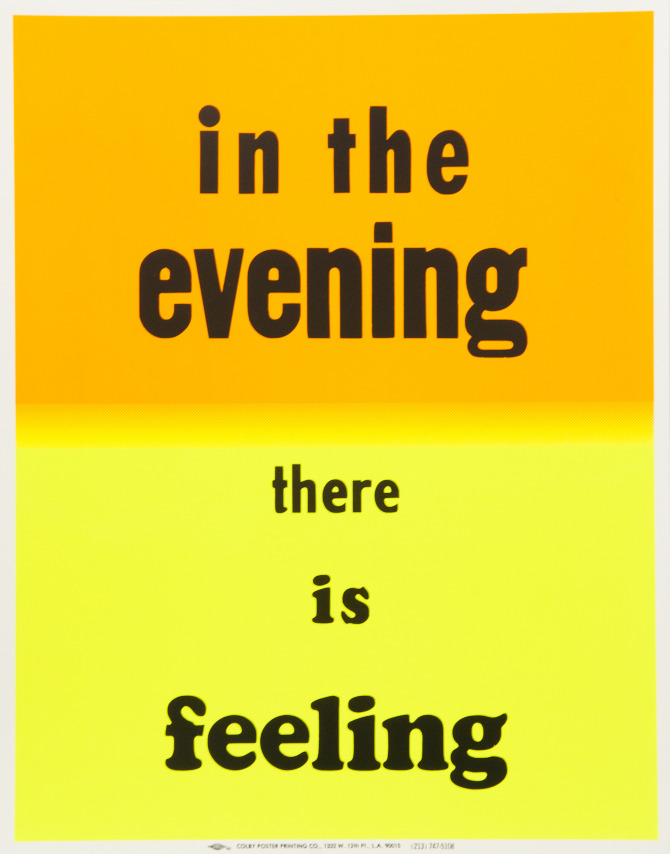
Posters, I'm thinking about posters. That's all.

Safe zone for the LGBT lactose and Fonterra tolerant among us

Monday, 2 November 2015

Queer Space?

Dipping a toe into queer urbanism... 

[Warning: contains high levels of US content!]

What is queer space? Aaron Betsky [author of the seemingly spurious text Queer Space: Architecture and Same-Sex Desire, 1997] has described queer space as “not built, only implied, and usually invisible,” and as “useless, amoral, and sensual space that lives only in and for experience.” 11 Can we envision a different kind of queer space — space that is more permanent, built and visible, even as we embrace the experiential and sensory?
Excerpted from “Queer Beacon,” an article by by Kian Goh about LBGT resistance to the gentrification of Greenwich Village, New York in Places Journal, June 2011. Accessed 02 Nov 2015. <https://placesjournal.org/article/queer-beacon/>


... and following the debate through to public monuments and the discourse of a gay modernity via abstracts of and excerpts from the chapter 'For Time Immemorial: Marking Time in the Built Environment':


This chapter looks at how Pierre Nora’s lieux de mémoire (places of memory) emphasized the need to revive queer identity, queer cultural collectivity, and marked environments during the post-AIDS onslaught. Queer spaces were initially identified as areas that are not built, only implied, and usually invisible. However, this issue somehow gained attention after the commissioning of two prominent lieux de mémoire: the Gay Liberation monument in New York and the Homomonument in Amsterdam. The chapter also examines Charles Jencks’“Gay Eclectic” style of house architecture, gay neighborhoods, and gay culture iconizing the character of Dorothy in the film The Wizard of Oz.
Between 1984 and 1992—that is, while fear and grief over AIDS, the previous chapter argued, played out in proscriptions against queer memory—the French historian Pierre Nora was supervising a massive (seven volume) study of what he influentially termed lieux de mémoire, places of memory. These memory sites, which include both physical places and rituals of commemoration, Nora contends, characterize modernity. Places of memory, Nora argued, enact self-conscious efforts “to block the work of forgetting” that is inherent to the “acceleration of history” in “our hopelessly forgetful modern societies, propelled by change” (“Between Memory and History,” 7, 19, 8). We...


In the book If Memory Serves: Gay Men, AIDS, and the Promise of the Queer Past by Christopher Castiglia and Christopher Reed (University of Minnesota Press, 2011). Retrieved from University Press Scholarship online available at: http://www.universitypressscholarship.com/search?f_0=keywords&q_0=Queer%20Space and somewhere else I can't locate anymore...

And returning to the contemporary context to get a sense of the significance of the field and it's consequence in the rebuilding of Christchurch for its LGBT citizens:


Of potential relevance are the examples of queer urbanism in Goh's 'From and Toward a Queer Urbanism' article in which she concludes:
Each of these [radical queer urbanist] initiatives asserts that the safety and welfare of LGBT people in cities cannot be divorced from the social, economic and spatial conditions of urban environments. From direct acts aimed at changing discriminatory bureaucratic policy to the more consuming work of changing prevailing public opinion, these campaigns literally broaden the possibilities of movement for queers in the city. They map, both literally and otherwise, paths forward for urban social movements that are critically inclusive. 
Progressive Planning Magazine April 14, 2015. Online journal. Accessed 02 November 2015. http://www.plannersnetwork.org/2011/04/from-and-toward-a-queer-urbanism/

Architecture Barbie

From the article: What I learned from Architecture Barbie 
by DESPINA STRATIGAKOS
 Places Journal 


Architect Barbie on display at the AIA convention in New Orleans, May 2011. 
[Photo courtesy of Mattel, Inc.]


Architect Barbie on display at the AIA convention in New Orleans, May 2011. 
[Photo courtesy of Mattel, Inc.]


Architect Barbie prototypes, created by Taubman College architecture students 
Enesh Easlick (doll on the left) and Mashawnta Armstrong (doll on the right) 
for a 2007 University of Michigan exhibition. 
[Photo by Paige Hammerschmidt and Caryn Schadegg, courtesy of Despina Stratigakos]


June 2011. ACCESSED 2 NOVEMBER 2015 

Highway by Momu & No Es